
Deck prep
Cordless pressure washer
Runs from a bucket, so you can wash a deck without dragging a hose around the house. Keep the pressure low on timber.
Check price on Amazon AUEvery November the same deck problem turns up. The boards look fine from the back door, then a heel goes through a soft patch and the whole structure is suspect. Most of it starts three summers earlier, when nobody sealed, cleaned or re-fixed a single board.
By Good Trades AU | Published 4 November 2026 | 7 minute read
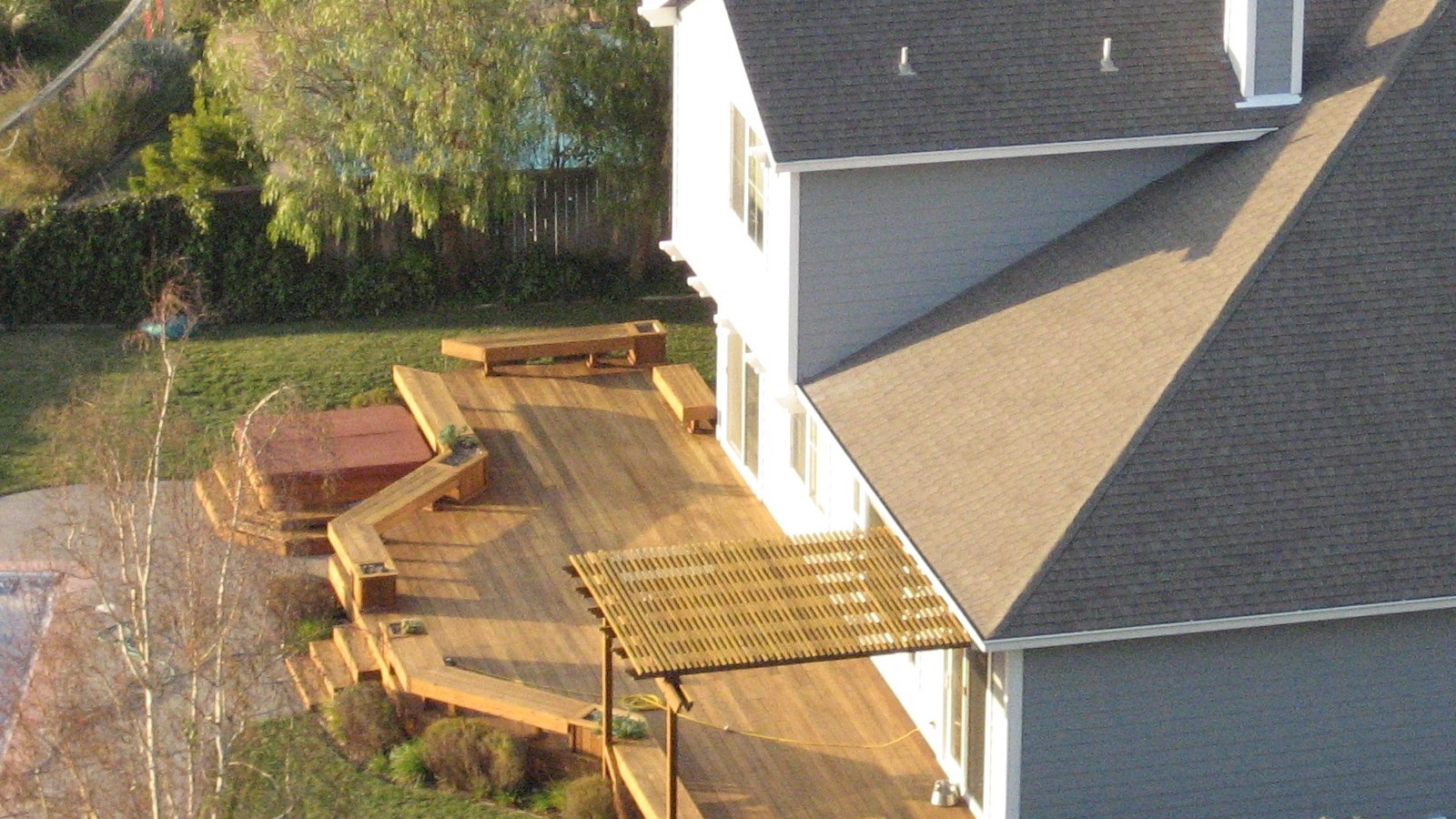
Summer is the hard season for a deck. Six months of drying sun, then a January storm that drives water into every open gap. The work that keeps a deck alive is not a weekend rebuild. It is five plain jobs done in the next few weeks, most of them under a few hundred dollars.
Dust, sap, bird lime and the grey dead cells of old timber all sit on the surface. Put oil or stain over that and the product cannot bond to clean wood, so the next winter lifts it in sheets. A painted deck fails the same way, with primer going down over grime.
The cheapest method is a hose, a stiff broom and a deck cleaner made for timber. Pressure washers work, but keep the nozzle moving and the pressure down. Held in one spot they lift the soft summer growth ring out of a board and leave permanent grooves that trap water all summer.
If you are washing a whole house exterior rather than one deck, the method is the same and our house painting cost guide covers what preparation actually means. A painted deck needs to be fully dry for at least a couple of days before primer, and that is a problem in a Sydney November, which is why most people wash one weekend and coat the next.
Do not buy on colour. Splash a cup of water across an average board and watch it for a minute.
More than one coat nowadays is a petrol and oxide film product pretending to be a deck oil. A film coat on a moving, breathing timber deck will crack within two summers. If the deck has had that treatment before, the removal is a sander and a long weekend, not a bottle of stripper.
For a softwood deck such as treated pine, a light sand at 80 grit followed by 120 grit smooths the raised grain that opens every summer. Hardwood such as merbau tends to splinter more than it furrs, so a light pass is usually enough.
Walk the deck in the middle of a hot afternoon, not in the morning. Timber swells with dew and hides the problems. You are feeling for three things.
That last point matters legally. A deck that carries people is residential building work. In NSW, a licensed contractor is needed for residential building work over $5,000, and the licence guide at trades that need a licence in NSW sets out the threshold and what a contractor has to hold before taking the job.
Timber wants a coat when it is cool and dry and the forecast is clear for a day. An 8am start on a 24 degree morning is far better than a 2pm start on a 35 degree afternoon, when the board surface is hot enough to flash the solvent off before it soaks in.
The order that works on a typical timber deck:
A mid-range oil costs far less than the annual labour of redoing it badly. Two coats on a 30 square metre deck is a morning for one person.
Boards are the part everyone sees and the cheapest part to replace. The structure under them is what fails and what actually costs money. Once a year, with a torch, look for the following.
Anything on that list that turns out to be structural goes to a licensed carpenter. Anything that is a board to lift and re-fix is something a homeowner can do safely with a drill, a set of good gloves and a plan.
These ranges come from our own deck and painting cost guides, read in November 2026. They are for guidance, not a quote.
| Job | Typical cost | Who should do it |
|---|---|---|
| Oil or stain a 30 sqm deck | $1,200 to $3,500 | Homeowner or a painter |
| Wash, sand and re-oil a deck | $1,200 to $3,500 | Homeowner, careful pressure washing |
| Replace a run of timber boards | Under $5,000 in most cases | Homeowner or a carpenter |
| Rebuild a 25 sqm pine deck, ground level | $9,000 to $16,000 | Licensed carpenter |
| A 25 sqm hardwood deck, elevated | $14,000 to $24,000 | Licensed carpenter |
| Timber decking supply, per square metre | $350 to $1,100 | Material only |
The full breakdown behind these numbers, including the difference between merbau, treated pine and other deck boards, is in the deck cost guide. If you are also painting the exterior this summer, the two jobs share the same preparation, so do the deck wash the same weekend.
Deck work is mostly time, not tools. These three earn their place if you own a deck and do the annual job yourself.
Runs from a bucket, so you can wash a deck without dragging a hose around the house. Keep the pressure low on timber.
Check price on Amazon AU
A leather palm for old boards and splintered edges. Cheaper than a tetanus booster and a day off.
Check price on Amazon AU
For deck cleaner and weed killer along the fence line. Applies evenly where a bucket and brush are awkward.
Check price on Amazon AUMore gear for the job on the power tools page.
Once a year in most of Australia, and twice in the first year on a new softwood deck. The splash test tells you when it is due: if water soaks in instead of beading, it is time.
Oil penetrates and needs redoing every year or two. Stain adds colour and more surface protection. Neither works on a damp deck, and both fail over an old film coat.
Yes, with the pressure low and the nozzle always moving. Holding it in one place on a softwood board gouges the grain and leaves a groove that holds water.
When it is structural: posts, bearers, joists or the connection to the house. In NSW, residential building work over $5,000 needs a licensed contractor, and the work needs home building compensation cover over $20,000.
Early morning, on a dry day with no rain forecast for 24 hours. Midday heat on a dark board will flash off the coat and leave streaks.