
Best value
50 m laser measure
Measures a room in seconds instead of walking a tape along the skirting. Fine for comparing quotes.
Check price on Amazon AUEvery year the same call comes in the second week of December: the tiler has gone quiet, the stone benchtop is on a truck somewhere, and the family arrives on the 24th. Most of it is not bad luck. It is a deadline set in October and never checked against how building work actually runs.
By Good Trades AU | Published 28 October 2026 | 8 minute read
This is not about rushing a renovation. It is about deciding this week which jobs can genuinely finish by mid-December, and which should be booked for February and left alone.
Renovations rarely fail in the first week. They fail in the third week of December, when the joinery is due and the room is full of boxes. The projects that finish are small, contained and boring. The ones that fail are where somebody decided in November to move a wall.
The dividing line is plumbing and approval. A bathroom refresh that keeps the toilet, shower and vanity in place is a surfaces job, and our bathroom cost guide puts it at $6,000 to $15,000. Move the shower or toilet and you are into new falls and new waste, the $35,000 to $55,000 end of the same guide.
Kitchens follow the same rule. A refresh in the same layout is $8,000 to $18,000, a full kitchen is $25,000 to $45,000, and a layout change is $40,000 to $65,000 once plumbing, gas and circuits move. If those numbers surprise you, read the kitchen cost guide before booking anything.
The test: can every trade finish in one unbroken run of two to three weeks, with no approval in the middle? If yes, it is a Christmas project. If no, it is a February project.
In early November every good trade in Sydney is juggling three jobs and a supplier that keeps moving dates. "We will fit you in before Christmas" is not a booking. A start date, a finish date and a deposit is.
Ask for four things in writing: start date, finish date, who will be on site, and what happens if a material arrives late. That last one matters most, because a tradie with no work goes to another job and you will not see them for a week.
Keep the deposit in proportion. Our extension cost guide puts it plainly: a builder asking for 30 per cent up front is using you as a bank.
Most suppliers and trades shut down between Christmas and mid-January, so a job that runs a week over lands in a month where nobody answers the phone.
Cabinetry, stone, tiles and windows are not stock items. Joinery is measured after a site check, cut to order and delivered on a factory schedule with no interest in your Christmas lunch. The order date is the real deadline.
Three things cause most of the December pain: custom joinery, which is measured, manufactured and installed in stages; stone benchtops, which are templated after the cabinets go in, then cut, then fitted; and tiles or windows that have to be ordered in, which can hold up a whole room while everything else sits ready.
Ask for a delivery date rather than a lead time. "Six to eight weeks" is not a date, and the gap between six and eight is a finished room or a hallway full of flat packs. Then agree who accepts the delivery.
Approvals run on their own clock and do not care about December. If the work needs a certificate, a development application, a survey or an engineer, find out now, while a decision is still possible.
The extension cost guide lists what the paperwork costs before a builder starts: survey $1,500 to $3,500, structural engineer $1,500 to $4,500, council or certifier fees $1,000 to $6,000, BASIX $500 to $1,500, and 10 to 15 per cent on top of the build quote for consultants and approvals overall. That money is spent before anyone arrives, and it is the part that cannot be compressed.
For anything structural, this is not a Christmas job. A deck might be, but only once the approval question is settled, and our deck cost guide flags a roofed deck as the version that usually needs council approval.
Most delays on a small renovation are not slow trades. They are two trades booked for the same day in the same room. The order is fixed enough to stick on the fridge:
Two days hide in that list: waterproofing cure and adhesive cure. Neither can be hurried with a heater, and both sit between trades who are booked solid.
In NSW, residential building work over $5,000 needs a written contract with the consumer notes attached, and work over $20,000 needs home building compensation cover. Both should exist before day one, not arrive by email in January.
Then check the licence on the NSW register: number, class of work and expiry. A licence that covers carpentry does not cover waterproofing, and one that expired in September is not a licence. The walkthrough is in our guide to trades that need a licence in NSW.
Tie progress payments to stages, not calendar dates. Make every change after signing a written variation with a price, agreed before the work happens.
The last week is not spare time. It is paint touch ups, silicone, a missing trim and a door that will not latch. Each one is small and each one needs somebody to come back, which a tight week has no room for.
Book handover a few days before you need the room. Walk the job with a written snag list, agree a date for the return visit, and hold the final payment until the list is done.
If the job will run late, say so early. A tiler told on the 20th can rebook the following week. A tiler told on the 23rd will not be back until February.
These ranges come from our own cost guides, read in October 2026. Jobs with no published range are left out rather than guessed.
| Job | Typical cost | Before Christmas? |
|---|---|---|
| Bathroom refresh, no plumbing moved | $6,000 to $15,000 | Yes, if booked early |
| Bathroom full renovation, same layout | $22,000 to $40,000 | Tight, materials must be on site |
| Bathroom with plumbing moved | $35,000 to $55,000 | No |
| Kitchen refresh, doors, top and sink | $8,000 to $18,000 | Yes, if joinery is ordered now |
| Kitchen full renovation | $25,000 to $45,000 | Only with a factory date |
| Kitchen with layout change | $40,000 to $65,000 | No |
| Three bedroom interior repaint | $4,500 to $9,000 | Yes |
| Deck oil or stain | $1,200 to $3,500 | Yes |
| 25 sqm pine deck, ground level | $9,000 to $16,000 | Only if no approval is needed |
If a quote lands well outside these ranges, ask why. Either the scope is bigger than you described, or the tradie does not want the job and has priced it that way. The guides hub has the breakdown behind every line.
If you are running your own renovation you will measure more than you expect: rooms for quotes, walls for joinery, gaps for appliances. None of these replaces a tradie.
Measures a room in seconds instead of walking a tape along the skirting. Fine for comparing quotes.
Check price on Amazon AU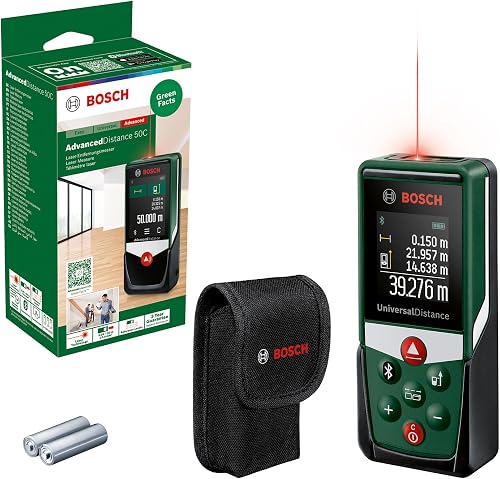
The one to buy if measurements feed cabinetry or tiling. Costs more, accuracy is the reason.
Check price on Amazon AU
Finds studs and live wiring in one pass, before a cabinet goes on a wall never built to carry it.
Check price on Amazon AUMore on the power tools page.
A cosmetic refresh with no plumbing moved is realistic if the trades are booked by early November and the tiles are on site. A full renovation with relocated plumbing is not, because waterproofing and adhesive cure times do not compress to fit a date.
A deposit in proportion to the contract, not a large slice of it up front. A builder asking for 30 per cent before work starts is using you as a bank, and you should ask what the money buys before you pay it.
Cabinetry and stone are made to measure after a site check, so the order date decides the finish. If the joinery is not ordered by mid-November, the realistic completion moves to January, when factories reopen.
In NSW, residential building work over $20,000 needs home building compensation cover, and work over $5,000 needs a written contract with the consumer notes attached. Ask for the certificate before work starts.